Imagine a dish that bursts with freshness, loaded with vibrant greens, tangy lemon juice, and juicy tomatoes. That’s tabbouleh for you—a staple of Middle Eastern cuisine that has gained global popularity. Whether you’re looking for a refreshing side dish, a healthy salad, or a way to add more greens to your diet, tabbouleh is a fantastic option.
In this article, we’ll explore everything about tabbouleh—its history, ingredients, a step-by-step guide to making it, common mistakes, variations, health benefits, and much more. So, grab your chopping board, and let’s dive into the world of tabbouleh! 🥗
“If you love the fresh and vibrant flavors of this Tabbouleh, you’ll definitely enjoy our article on 10 Reasons to Love Mediterranean Couscous Bowls + Easy Recipe – another healthy and delicious dish to try! 🍽️
Table of Contents
“Tabbouleh is more than just a salad; it’s a celebration of freshness and flavor.”
What is Tabbouleh? A Traditional Lebanese Salad
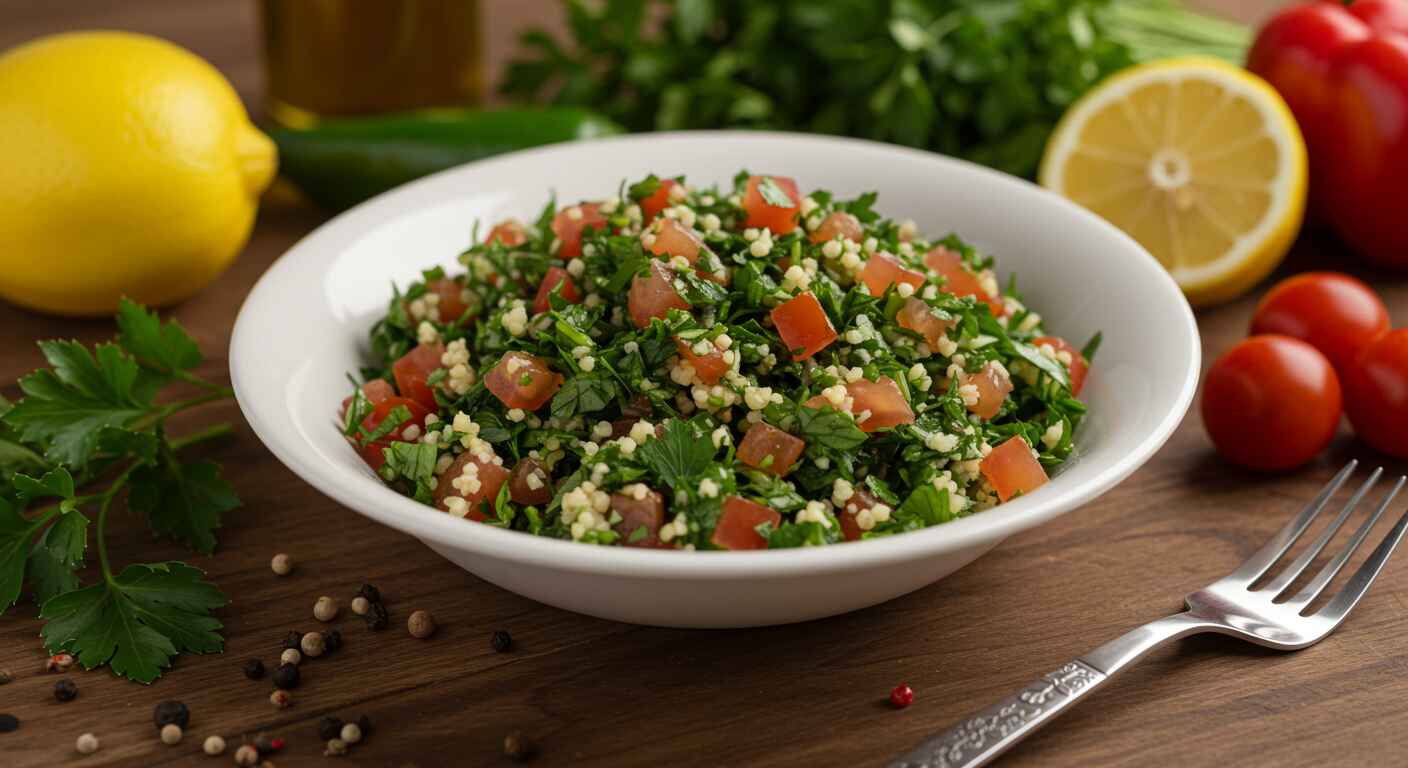
Tabbouleh (sometimes spelled tabouleh or tabouli) is a Mediterranean salad made primarily with finely chopped parsley, tomatoes, onions, bulgur wheat, mint, and a dressing of olive oil and lemon juice. It’s a light, refreshing dish with a citrusy kick and a slightly chewy texture from the bulgur.
Traditionally, tabbouleh is served as part of a mezze (a collection of small dishes), but it also works well as a stand-alone salad or a filling in wraps and sandwiches.
The Origins of Tabbouleh: A Historical Perspective
Tabbouleh dates back to over 4,000 years ago, originating in the mountains of the Levant region (modern-day Lebanon and Syria). The word itself comes from the Arabic word ‘taabil’, which means ‘to season’ or ‘to spice up.’ The dish was first made by ancient Levantine communities, where parsley and mint were abundant.
Over time, this humble salad spread beyond the Middle East and became a global sensation. Today, you’ll find variations of tabbouleh across different cultures, each with its unique twist.
Why is Tabbouleh So Popular Worldwide?
So, what makes tabbouleh such a beloved dish worldwide? Here are a few reasons:
- 🥗 Super Healthy – Packed with vitamins, fiber, and antioxidants.
- 🍋 Refreshing & Light – The citrusy dressing makes it perfect for warm weather.
- 🌿 Plant-Based & Vegan – 100% natural and suitable for all diets.
- 🌍 Globally Adaptable – Easy to modify with different grains, herbs, or proteins.
Ingredients of Authentic Tabbouleh: What Makes it Special?
To make traditional Lebanese tabbouleh, you’ll need a handful of simple, fresh ingredients. The key is using high-quality produce to get the best flavor.
| Ingredient | Quantity | Notes |
|---|---|---|
| Fresh Parsley 🌿 | 2 cups (finely chopped) | Flat-leaf parsley works best. |
| Mint Leaves 🌱 | 1/2 cup (chopped) | Optional but adds great flavor. |
| Bulgur Wheat 🌾 | 1/2 cup | Use fine bulgur for the best texture. |
| Tomatoes 🍅 | 2 large (diced) | Use ripe, juicy tomatoes. |
| Green Onions 🧅 | 3 stalks (chopped) | You can use red onions as well. |
| Lemon Juice 🍋 | 1/4 cup | Freshly squeezed for a tangy kick. |
| Extra Virgin Olive Oil 🫒 | 1/3 cup | Use high-quality olive oil. |
| Salt 🧂 | To taste | Enhances the flavors. |
| Black Pepper 🌶️ | 1/2 tsp | For a mild spice kick. |

Choosing the Best Ingredients for Maximum Freshness
- Parsley – Always use fresh, bright green parsley. Avoid wilted or yellow leaves.
- Bulgur – Opt for fine bulgur (not coarse) for a light, fluffy texture.
- Lemon Juice – Fresh lemons make a huge difference compared to bottled juice.
- Olive Oil – A high-quality, extra virgin olive oil will enhance the taste.
Step-by-Step Guide: How to Make Traditional Tabbouleh
Making tabbouleh is straightforward, but the key to success lies in the chopping technique and balancing the flavors.
Step 1: Prepare the Bulgur
- Rinse the bulgur under cold water.
- Soak it in a bowl with warm water for 10-15 minutes.
- Drain and squeeze out any excess water.

“A good tabbouleh has the perfect ratio of bulgur to greens—parsley should always be the star of the dish.”
Step 2: Finely Chop the Herbs
- Chop the parsley as finely as possible. Use a sharp knife and avoid bruising the leaves.
- Finely chop the mint for an extra burst of freshness.
Step 3: Dice the Vegetables
- Dice the tomatoes into small pieces. Remove excess seeds if they are too watery.
- Chop the green onions finely.
Step 4: Mix Everything Together
- In a large bowl, combine the bulgur, parsley, mint, tomatoes, and onions.
- Add the lemon juice, olive oil, salt, and pepper.
- Toss everything together until well mixed.

Step 5: Let it Rest & Serve
- Let the salad sit for 10-15 minutes to absorb the flavors.
- Serve chilled or at room temperature.
Common Problems and Solutions When Making Tabbouleh
Even though tabbouleh is simple to make, a few common mistakes can ruin its texture and taste. Here’s how to fix them:
My Tabbouleh is Too Watery: How to Fix It?
This happens when the tomatoes release too much juice.
- Solution: Remove excess seeds from tomatoes and drain them before adding them to the salad.
- You can also squeeze out excess water from bulgur after soaking.
Why is My Tabbouleh Too Dry?
If your salad lacks moisture, it could be due to under-soaked bulgur or not enough dressing.
- Solution: Let the bulgur soak longer and add a little more olive oil and lemon juice.
Variations of Tabbouleh: Modern Twists on the Classic Dish
While traditional tabbouleh is already delicious, many people love experimenting with different ingredients to suit their dietary needs and taste preferences. Let’s explore some creative variations!
Quinoa Tabbouleh: A Gluten-Free Alternative
Quinoa is a fantastic replacement for bulgur because it’s naturally gluten-free, packed with protein, and has a slightly nutty flavor.
“Quinoa tabbouleh keeps the freshness of the original recipe while offering a protein boost!”
- Use cooked quinoa instead of bulgur.
- Everything else remains the same—parsley, tomatoes, lemon juice, and olive oil.
- Rinse quinoa well before cooking to remove bitterness.
Mediterranean Chickpea Tabbouleh for Extra Protein
If you want a heartier version of tabbouleh, add chickpeas! This variation is perfect for a satisfying meal.
- Add 1 cup of canned or boiled chickpeas.
- Enhance the flavor with a pinch of cumin or sumac.
- Serve it as a main dish rather than a side.

Keto Tabbouleh: A Low-Carb Version
For those following a keto diet, you can make a carb-free version of tabbouleh by replacing bulgur with finely chopped cauliflower rice.
- Pulse fresh cauliflower florets in a food processor to create a grain-like texture.
- Use it as a direct substitute for bulgur.
- Enjoy the same flavors with fewer carbs!
Health Benefits of Tabbouleh: Why You Should Eat More of It
Tabbouleh isn’t just tasty—it’s a superfood in disguise! Let’s break down why it’s such a healthy addition to your diet.
| Nutrient | Health Benefit |
|---|---|
| Vitamin C 🍋 | Boosts the immune system and promotes glowing skin. |
| Fiber 🌿 | Supports digestion and keeps you feeling full. |
| Antioxidants 🍅 | Fights inflammation and reduces the risk of diseases. |
| Iron 🩸 | Helps prevent anemia and supports energy levels. |
| Healthy Fats 🫒 | Good for heart health and brain function. |
How Tabbouleh Supports Digestive Health
Thanks to its high fiber content from parsley and bulgur, tabbouleh keeps your digestive system running smoothly. Fiber prevents constipation and promotes a healthy gut.
Weight Loss and Tabbouleh: A Low-Calorie Option
If you’re watching your weight, tabbouleh is a great choice. It’s low in calories but packed with nutrients, making it a great filler without excess calories.
“Tabbouleh is proof that healthy food doesn’t have to be boring!”
Best Serving Ideas: What to Eat with Tabbouleh?
Tabbouleh is incredibly versatile! Here’s how you can enjoy it:
Traditional Pairings: What Goes Best with Tabbouleh?
- 🥙 With Pita Bread – Scoop up tabbouleh with warm pita for an authentic experience.
- 🍢 With Grilled Meat – Serve alongside grilled chicken, lamb, or beef.
- 🧆 With Falafel – A perfect vegetarian combo.

Creative Ways to Serve Tabbouleh at Parties
Tabbouleh isn’t just a side dish—it can be a star at any gathering!
- 🍽️ In Lettuce Wraps – Use romaine or iceberg lettuce to make fresh, crunchy wraps.
- 🥑 Stuffed in Avocado Halves – A trendy and delicious way to enjoy tabbouleh.
- 🍢 As a Topping for Hummus – Mix it into hummus for extra texture and flavor.
How to Store Tabbouleh and Keep It Fresh
How Long Does Tabbouleh Last in the Fridge?
Freshly made tabbouleh lasts 2-3 days in the refrigerator when stored properly.
Can You Freeze Tabbouleh?
Not recommended! Freezing will make the parsley and tomatoes lose their fresh texture.
The Best Containers for Storing Tabbouleh
Use an airtight glass container to keep it fresh and prevent excess moisture from ruining the texture.
Frequently Asked Questions About Tabbouleh
Can You Make Tabbouleh Ahead of Time?
Yes! In fact, letting it sit for a few hours allows the flavors to blend beautifully.
Is Tabbouleh Vegan and Gluten-Free?
Traditional tabbouleh is vegan, but not gluten-free (because of bulgur). Use quinoa or cauliflower rice for a gluten-free version.
Can I Use Couscous Instead of Bulgur?
Yes, but the texture will be slightly different. Couscous is softer, while bulgur has more bite.
Final Thoughts: Why Tabbouleh is a Must-Try Dish
Tabbouleh is more than just a salad—it’s a celebration of fresh flavors, a nutritional powerhouse, and a versatile dish that fits into any meal plan. Whether you make it the traditional way or put your own twist on it, one thing is certain: tabbouleh is here to stay! 🌍🥗
“If you haven’t tried tabbouleh yet, you’re missing out on one of the freshest, healthiest salads on the planet!”
Now, it’s your turn to make this delicious Mediterranean salad. Grab your ingredients, start chopping, and enjoy every bite of this refreshing dish. Happy cooking! 👨🍳
Print
How to Make Traditional Tabbouleh Like a Pro (With Common Mistakes to Avoid!)
- Total Time: 20 minutes
- Yield: 4–6 servings 1x
- Diet: Vegetarian
Description
This authentic Lebanese Tabbouleh is a light, refreshing, and healthy salad made with fresh parsley, ripe tomatoes, bulgur wheat, mint, and a tangy lemon dressing. Perfect as a side dish or a nutritious meal, this recipe bursts with Mediterranean flavors and is packed with nutrients! 🥗✨
Ingredients
For the Salad:
- 2 cups fresh flat-leaf parsley (finely chopped) 🌿
- 1/2 cup fresh mint leaves (chopped) 🌱 (optional but recommended)
- 2 large ripe tomatoes (diced) 🍅
- 3 stalks green onions (finely chopped) 🧅
- 1/2 cup fine bulgur wheat 🌾 (or quinoa for a gluten-free version)
For the Dressing:
- 1/4 cup fresh lemon juice 🍋
- 1/3 cup extra virgin olive oil 🫒
- 1/2 teaspoon salt 🧂 (adjust to taste)
- 1/2 teaspoon black pepper 🌶️ (optional: a pinch of sumac for extra tang)
Instructions
1️⃣ Rinse the bulgur wheat under cold water and soak it in warm water for 10-15 minutes until soft.
2️⃣ Drain well and squeeze out excess water. (If using quinoa, cook it according to package instructions and let it cool.)
🔪 Finely chop the parsley and mint—use a sharp knife to avoid bruising the leaves.
🥄 Dice the tomatoes and green onions into small, even pieces. (Remove excess tomato seeds to prevent a watery salad.)
🥗 In a large mixing bowl, combine the bulgur, parsley, mint, tomatoes, and green onions.
🍋 In a small bowl, whisk together the lemon juice, olive oil, salt, and black pepper.
🥣 Pour the dressing over the salad and toss well until everything is evenly coated.
🕑 Let it sit for 10-15 minutes before serving to allow the flavors to blend.
✅ Enjoy your fresh, zesty Tabbouleh! 🥗✨
Notes
✔ Finely chop everything for the best texture.
✔ Use fresh ingredients—parsley should be bright green and crisp.
✔ Adjust the dressing to taste—add more lemon for extra zing!
✔ Let it rest before serving for better flavor absorption.
✔ Store leftovers in an airtight container in the fridge for up to 3 days. (Not suitable for freezing! ❄️
- Prep Time: 20 minutes
- Cook Time: 0 minutes (Bulgur soaks, no cooking needed!)
- Category: Salad
- Method: Chopping & Mixing
- Cuisine: Lebanese, Mediterranean
Nutrition
- Serving Size: 1 cup
- Calories: 180 kcal
- Sugar: 2g
- Sodium: 150mg
- Fat: 12g
- Saturated Fat: 2g
- Unsaturated Fat: 10g
- Trans Fat: 0g
- Carbohydrates: 15g
- Fiber: 5g
- Protein: 4g
- Cholesterol: 0mg